
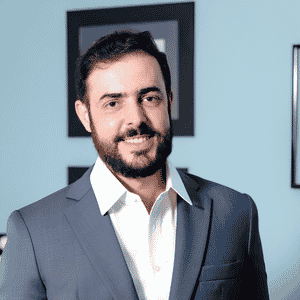
Francisco Mendonca de Albuquerque
Claretian Medical School of Rio Claro, BrazilPresentation Title:
Francisco Mendonca de Albuquerque
Abstract
The evidence of volume loss, as a primary aging factor, was clearly described by Lambros. In this sense, the demand for dermal fillers that are safe, long-lasting and biocompatible has grown. Autologous fat grafting has been widely used, especially by plastic surgeons, as the best choice. However, the lack of reliability and consistency in the final clinical results is a major concern, which may generate the need for multiple procedures. In fact, the literature does not provide clear data on how much the injected fat really lasts. From the end of the 1980s, Coleman advocated lhe meticulous systematization of lipografting as a solution to minimize the lack of reliability of the method and he continued to have expressive, consistent and long-term lasting results, until, in the mid-1990s, he began to observe other attributes of fat grafts, like improved skin quality, wrinkle smoothing, decreased pores and improved pigmentation. Tonnard et al. reinforced this clinical impression and published inlradermal injection of fine needle fat (SNIF) and nanofat graft, with even thinner needles. The objective of this work is to report how to perform fat grafting in facial rejuvenation, detailing indications, patient preparation, methodology, fat-graft preparation, forms of injection and post-procedure care. With adequate selection of patients and the facial areas to be treated; and after adequate fat harvesting and processing, facial fat grafting can be used more consistently in deeper application in the hypodermis and deep dermis for volumizing effect and more fluidly in application with more delicate cannulas or needles in the superficial dermis to improve skin quality, fine wrinkles and pigmentation.
Biography
Francisco Mendonca de Albuquerque is a distinguished plastic surgeon from Brazil with expertise in facial aesthetic surgery, regenerative approaches, and advanced fat grafting techniques. He is affiliated with the Claretian Medical School of Rio Claro, where he contributes to the academic and clinical advancement of aesthetic medicine and plastic surgery. His areas of interest include facial rejuvenation, lipofilling, autologous fat transfer, facial contouring, and innovative approaches aimed at restoring facial volume and enhancing natural aesthetic outcomes. Dr. Albuquerque focuses on evidence-based surgical practices that combine precision, safety, and personalized treatment strategies to achieve harmonious and long-lasting results for patients. Through his clinical experience and dedication to continuous learning, he actively contributes to the evolving field of facial aesthetics by exploring modern techniques and sharing knowledge with the wider medical community. His work reflects a commitment to advancing minimally invasive and regenerative solutions within plastic and aesthetic surgery.

Organization Location
1309 Coffeen Avenue, STE 1200, Sheridan, Wyoming 82801, USA
General Enquiry
contact@scientexconferences.com
Finance Enquiry
finance@scientexconferences.com
Call us at
USA : (+1) 217 583 7058