

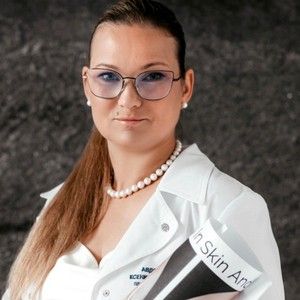
Ksenia Avdoshenko
Institute of Plastic Surgery and Cosmetology, Russian FederationPresentation Title:
Facial Anthropometric Analysis in Aesthetic Medicine: Toward a New Method for Assessing Visual Proportions
Abstract
In various fields of aesthetic medicine—including plastic and reconstructive surgery, maxillofacial surgery, and dermatocosmetology—harmonization of facial proportions is a central therapeutic goal. Traditional anthropometric assessments rely on cephalometric landmarks and indices to evaluate facial proportionality. However, these standard measurements fail to account for age-related changes in facial height and width, which are key variables in existing formulas. Furthermore, conventional metrics do not reflect the true volume, thickness, or spatial distribution of soft tissues. It is well established that facial soft tissue volume varies significantly based on body weight, ethnicity, age, gender, dental occlusion, and prior cosmetic interventions. Therefore, there is a clear need to develop novel cephalometric parameters that incorporate soft tissue volume and thickness into the assessment of facial proportions.
This study aimed to evaluate previously described cephalometric parameters and correlate them with visual and aesthetic perception of facial harmony. Our goal was to identify new cephalometric markers that accurately reflect the true visual (morphological) height and width of the face, eliminate errors in visual assessment, and are practical for routine clinical use.
A clinical and photographic analysis was conducted on 150 patients both preoperatively and one year postoperatively. A retrospective photometric evaluation was performed using standardized frontal photographs taken before surgery and at the one-year follow-up. All images were acquired with the head positioned according to the Frankfort horizontal plane to ensure consistent orientation. Traditional cephalometric landmarks were compared with subjective aesthetic evaluations and visual perception of facial proportions.
The analysis revealed a significant discrepancy between conventional anthropometric measurements and perceived aesthetic outcomes. Standard cephalometric points failed to account for soft tissue atrophy, ptosis, and age-related facial deformation, leading to inaccurate assessments of facial proportionality. Based on these findings, we propose a new set of cephalometric parameters that are both clinically practical and anatomically relevant. These novel markers focus on “visual morphological height” (from the upper vermilion border to the submental point, adjusted for soft tissue contour) and “visual morphological width” (greatest bizygomatic distance at the level of soft tissue projection), providing a more accurate representation of perceived facial proportions.
Biography
Ksenia Avdoshenko is a highly accomplished plastic surgeon with a PhD and extensive expertise in surgical facial rejuvenation. She completed her medical education at Pirogov Russian National Research Medical University (1994–2000) and currently serves as a senior surgeon at the Russian Institute of Plastic Surgery and Cosmetology. She is also the founder of the Avdoshenko School, an online platform dedicated to training plastic surgeons, and actively conducts cadaver-based courses to advance surgical skills in the field. Her specialties include blepharoplasty, SMAS lifting, and deep plane facelift techniques, reflecting her strong focus on advanced facial aesthetic procedures.

Organization Location
1309 Coffeen Avenue, STE 1200, Sheridan, Wyoming 82801, USA
Mail us at
Drop us an email for Program enquiry
cosmetology@scientexconferences.com
General Enquiry
contact@scientexconferences.com
Registration Enquiry
finance@scientexconferences.com
cosmeticsurgery@scientexevents.org
Our Social Presence
Call us at
USA : (+1) 217 583 7058